
Race plays a significant part of society and culture. But how does it correlate to fashion economics, marketing, and branding?
Within the fashion world, their society is isolated from the rest of everything else, and the only concept of a class system is through brands and designers. When critics analyze fashion, most focus on the economics, labor, or environmental sides of the industry, but only recently have there been more media attention on cultural and social issues. Due to the break of more political and social protests concerning equal rights, more light is being shed on racism within fashion. Robin Ghivan, from The Washington Post, and other fashion critics arose from these already existing racial conflicts, and they are bringing people’s awareness to a dark place of fashion brands and their roles as consumers.
From a marketing and branding perspective, race plays a significant part in shaping the type of consumers fashion companies intend to target. In a scholarly article by Judy Davis titled, “Selling Whiteness? A Critical Review of the Literature on Marketing and Racism,” the author deducts that the relationship between racism and marketing is a product of the reliance on popular media to exemplify their messages. The most simplest outline of why marketing and racism coincide with each other begins at the racial history of America. Taking into account the deep rooted past of slavery and discrimination, social critics believe that socio-economic classes formed through racial history contribute to the marketing practices people see today. The cycle of racism and social injustices create an inherent pattern of racist marketing, and in the end, the densensitization of stereotypes and hate the media continues to produce.
Two large and popular fashion brand houses, Nike and Dolce & Gabbana, are examples of how race affects marketing and branding. Although both brands sell distinct products (Nike being known for their athletic wear and Dolce & Gabbana being known for their ornate clothing) and price ranges,
Nike and Mass Consumerism
Nike is a ubiquitous household name among all consumers, making it one of the most popular and culturally relevant brands. The company founded in America, is largely known for their athletic-wear sponsored by big-name and upcoming athletes/celebrities like Lebron James and Serena Williams. One of Nike’s most recognized and controversial advertisements was the collaboration with 49ers football quarterback, Colin Kaepernick.
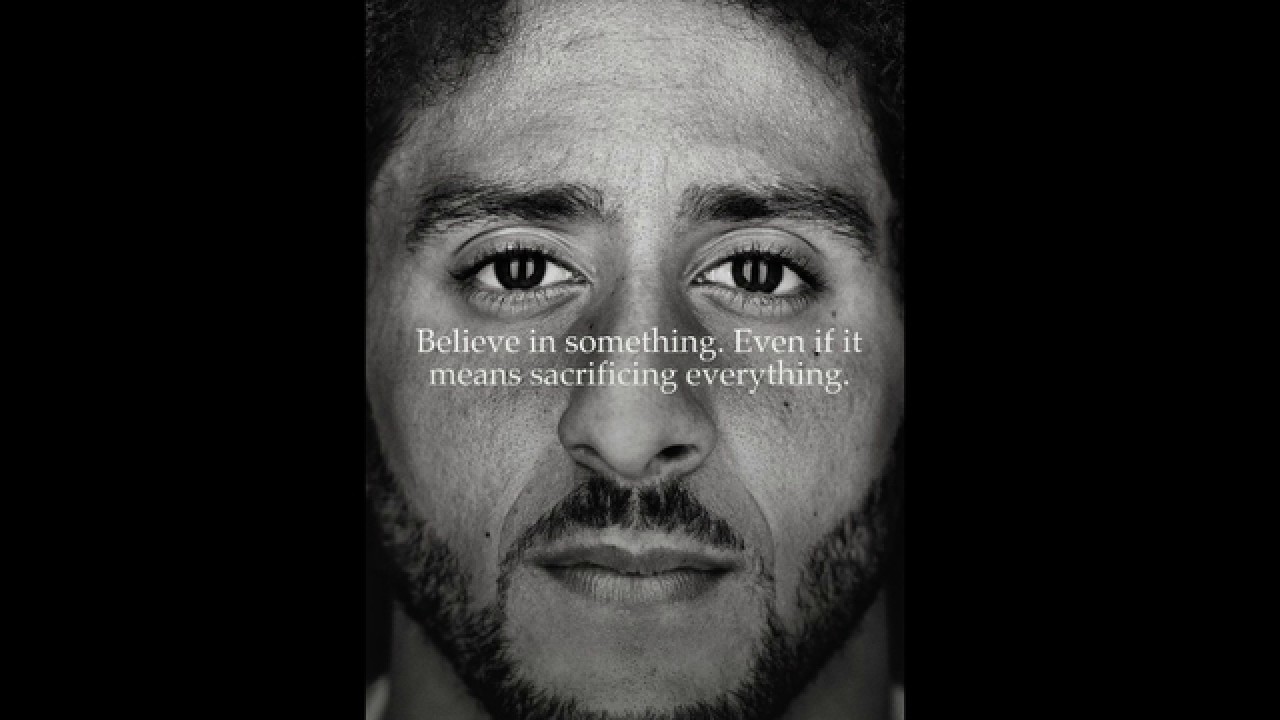
In 2018, Nike’s release of Colin Kaepernick’s ad following his political protest involving the NFL, sparked controversy and garnered massive media attention beyond football fans. The ad that pictured a closeup of Kaepernick’s face and the words, “Believe in something. Even it means sacrificing everything,” printed in front of his face all in black and white, triggered responses from all different types of people. Tweets from people against the ad were fired showing pictures of burnt Nike sneakers and cut t-shirts and socks. On the other side of the spectrum, tweets applauded Nike for their braveness and willingness to stand for social justice. When Nike released the ad, it was one of the several times a fashion brand became more than culture and style, the brand became political.
In an article from Vox titled, “How Nike’s Colin Kaepernick ad explains branding in the Trump era,” even though Nike received backlash and negativity, the sponsorship was actually a trending marketing strategy that served to instigate political controversy. Nike knew exactly what it was doing when they partnered with Kaepernick during his political activism in support of black lives. During an age of people being “woke” (a term used by the younger generation to represent awareness of politics, social injustices, and things like corruption) and most things that trend online are meant to incite a reaction, Nike utilizes the power of the digital age combined with politics to create a tactical and successful brand campaign.
Nike’s political stance which sided with Kaepernick’s message was not a new marketing tactic. Since 2017, big-name companies like Coco-Cola have also made ads that solidified their stance on social and political issues. With Trump’s presidency becoming a reality to many corporations, CEOs felt a need to speak out and side with the public on pressing concerns, setting up a marathon of activism within social media and advertisements. By entering the world of politics, companies are actually strategically elevating their brand’s name. In the Vox article, the writer, Rebecca Jennings, cites a study in which two-thirds of consumers stated that they think it is significant that brands stand by social and political issues, furthering the connection between them and what they are purchasing.
The use of race in Nike’s ad with Colin Kaepernick is reflective of not only the type of marketing big corporations are selling, it is also representative of the target consumer and the brand’s image. Economically, Nike’s targets mass consumers rather than a specific niche, they instead try to reach a global audience. While they specialize in athletic wear, Nike’s end goal is to spread their brand and garner as much attention to increase sales and profit. The type of individual that buys apparel and shoes from Nike can be completely different in class status and race as someone who buys from Dolce & Gabbana. When Nike promotes figures like Colin Kaepernick, their brand image symbolizes the black movement and racial equality.
Dolce & Gabbana and Isolated Racism
On the other side of the fashion world, a more exclusive market is controlled by high-end fashion brands like Chanel, Gucci, and Prada. Dolce & Gabbana is an Italian fashion brand founded by Domenico Dolce and Stefano Gabbana in 1985. Since the brand’s beginning, Dolce & Gabbana had a history of making it to the top of the fashion food chain, leaving a legacy as one of the most sought after fashion runways and clothing lines. Yet while Dolce & Gabbana have had a successful fashion story, the brand has also been represented poorly and negatively through their marketing campaigns and evident racist values brought out by one of the founders and creative directors himself, Stefano Gabbana.
Stefano Gabbana is one of the main controversial figures which has a sparked an interrogation of Dolce & Gabbana as a racist brand by the public. Gabbana’s history of offensive and demeaning comments and actions have been marked by outraged fashion critics and humanitarians. Examples of obvious offensive intent such as in their 2012 runway, when models wore blackamoor earrings or in 2017 when Gabbana released a homophobic Tweet bashing on gay designers and excluding him from the gay community.
One of the most notable scandals/ feuds involving Gabbana in popular media was after the fashion brand’s outward political support of Melania Trump. After their Summer 2018 fashion show, Miley Cyrus congratulated her brother on Twitter for walking on the runway, but since she is known for being openly liberal and political, she criticized the brand for dressing Melania Trump as well. Gabbana was not slow or shy to respond back to Cyrus’ critic of his decision.
Stefano Gabbana commented: “We are Italian and we don’t care about politics and mostly neither about the American one! We make dresses and if you think about doing politics with a post it’s simply ignorant. We don’t need your posts or comments so next time please ignore us!! #boycottdolcegabbana 😂😂😂😂❤️.”
via Twitter
The #boycottdolcegabbana was trending after Gabbana’s evident support of Trump backed by his racist actions and comments. Women and men that were against Dolce & Gabbana organized protests with shirts that mocked the brand’s signature ornate designs and throughout the backlash, Gabbana remained unfazed by negative media attention. When someone Googles or YouTubes Stefano Gabbana’s name, the results are all about evidence to his values and the type of brand Dolce & Gabbana has become.
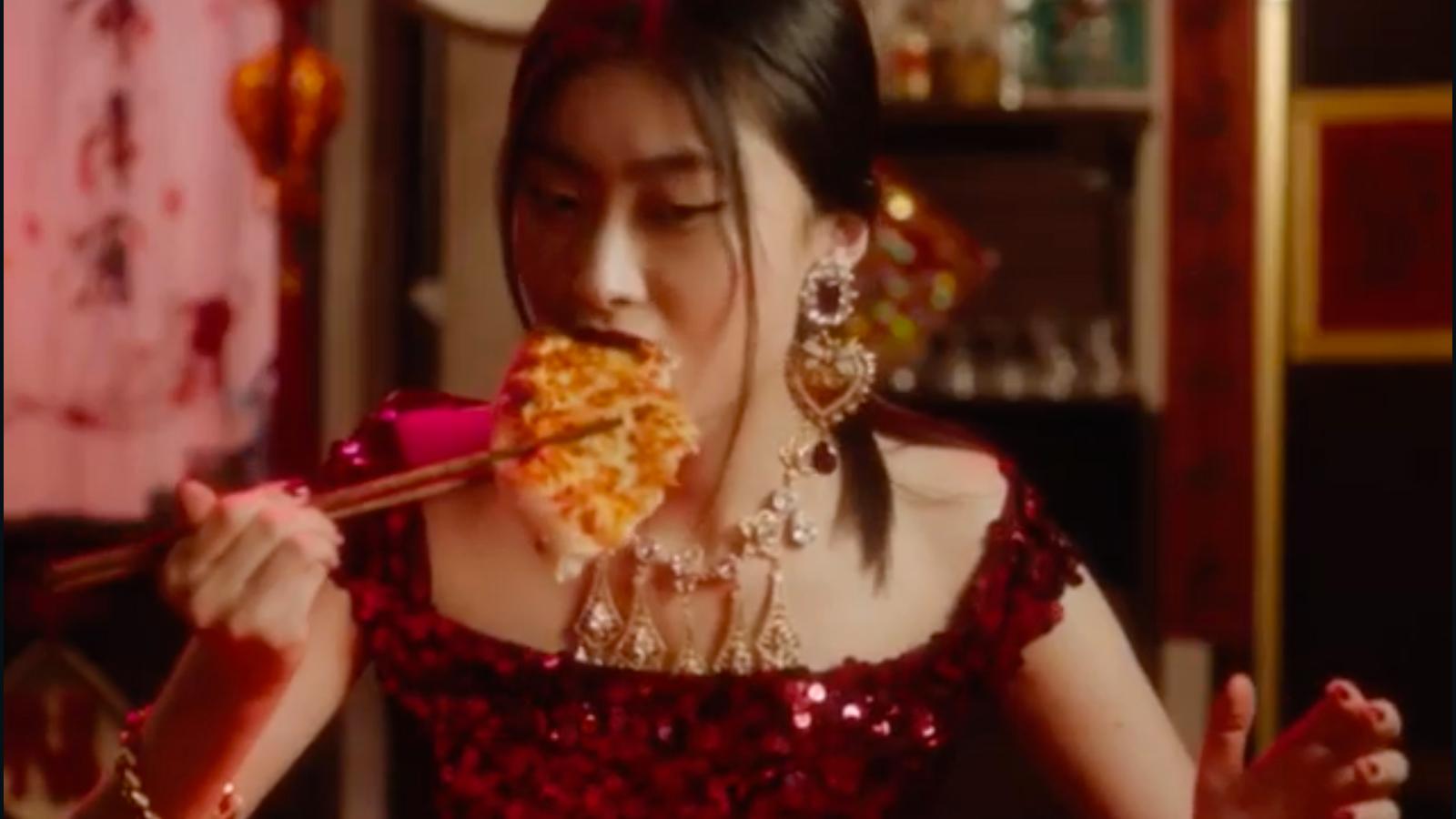
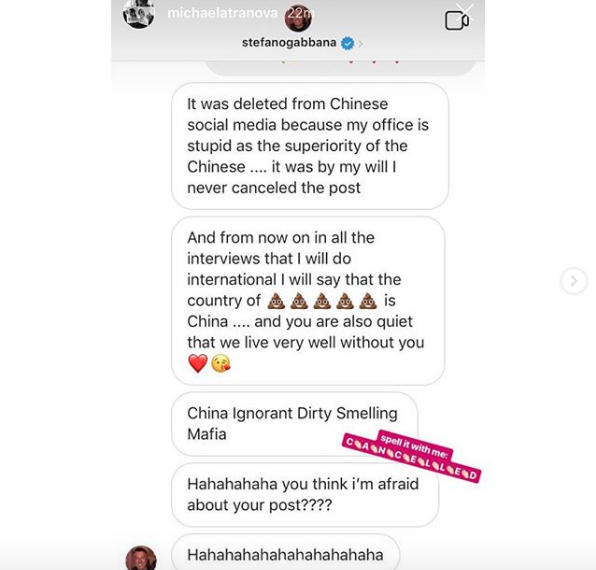
The most recent racist scandal was on November 2018 when Dolce & Gabbana released a promotional video for their next fashion runway show of a Chinese model eating pizza with chopsticks and dropping it, portraying her as clumsy and uncultured. “The Great Show” as the runway was supposed to be called was forced to be cancelled due to so many of Chinese brand ambassadors pulling out of support. After the outraged responses from fashion critics and the Chinese community, things became worse when someone leaked a screenshot of an Instagram conversation between Stefano Gabbana and a user named, Michael Tranova. In the conversation, Gabbana insinuates that he could care less about the commercial’s backlash and that the Chinese people were like poop. After at first trying to blame the comments on a hacked account, he later apologized for his comments.
The backlash Dolce & Gabbana received from the Chinese racist advertisement did not go unheard this time. As one of the leading target consumers, many Chinese customers have made it clear that they want nothing to do with the brand, which to many fashion brands is like a death sentence. According to a Forbes article titled, “Dolce & Gabbana’s Brand Reputation ‘In Rags’ Over China Ad Outrage,” China represents one of the largest global markets for high-end brands and just fashion in general. In a recent report by the consultancy, Bain & Company, the market for luxury items was predicted to grow in 2018 by 20%-22%, making the actual revenue from just China alone, $313-$319 billion, a statistic that Dolce & Gabbana cannot afford to lose.
The highly offensive and racist ad was the start to Dolce & Gabbana’s need for rebranding over their values and content. Unlike Nike, Dolce & Gabbana does not seek to entertain or please a mass global audience, rather they want their name to be heard but the exclusivity of their products to remain almost untouchable similar to brands like Chanel, Fendi, and Prada. Given their economic goals, it comes as no surprise why their founder, Stefano Gabbana, makes such public and forward actions of racism. The high-end world of fashion has always been isolated from everything else in culture and within the actual fashion community as well. Culturally, brands like Dolce & Gabbana are set back from being aware of social injustices and issues relating to race and gender, because they literally live in their own world. Similar to the concept of separation of church and state, the brand has stated many times that they are separated from any politics. However, Dolce & Gabbana’s isolation has led them to be ignorant and in the end of it all, the marketing behind the brand must adapt to the “wokeness” displayed by Nike’s marketing strategy.
In order to come back from a scandal like this, the Forbes article mentions that high-end brands have to work a little differently in managing a scandal like this. Frank Marr, a reputation management expert at AM+A Marketing in London states,
As part of all corporate socially responsible (CSR) strategies, organizations should aim to be making the world a better place. Organizations have an obligation to their customers to think about how they can encourage positive social behaviour change.”
Forbes
According to Marr and other reputation strategists, for Dolce & Gabbana to return from the backlash, they need to start being socially and politically sensitive and aware to its marketing strategies and values. Customers are have always been the top drive and goal for fashion brands, and if that factor is removed from the overall system, there is no way a fashion brand can survive doing whatever they want.
What does this mean about Dolce & Gabbana as a fashion brand which influences thousands of people who cannot even buy some of their clothes? Dolce & Gabbana has ascended many goals a fashion brand wants to accomplish, but what is their responsibility as a high-end exclusive brand to the public? As of right now Dolce & Gabbana is gradually working to fix itself and its long list of offensive and racist mistakes. While marketing strategies can be implemented to fix the negative media attention Dolce & Gabbana is currently receiving, there is still a mark of who they truly are as a brand. In this digital age, fashion brands are under constant scrutiny, and in order to survive, they must be socially, culturally, and politically savvy to the world around them.

 Racism in Fashion